Whatsapp
 +91 9496064000
 Login
Login
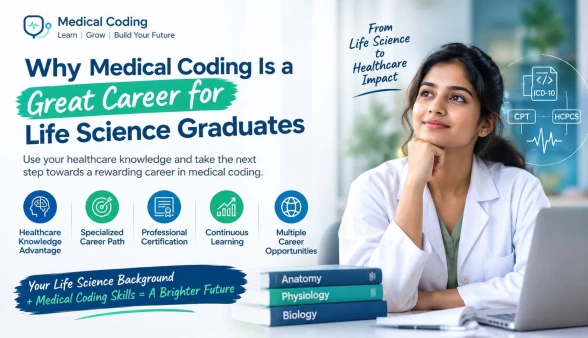
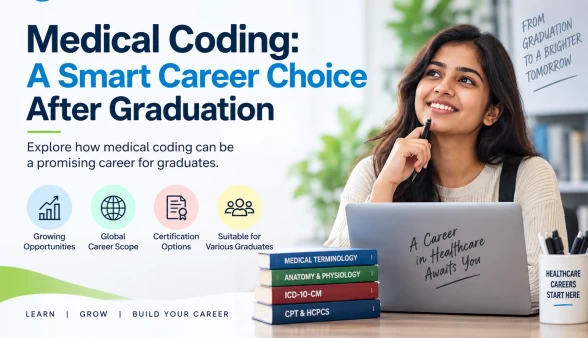
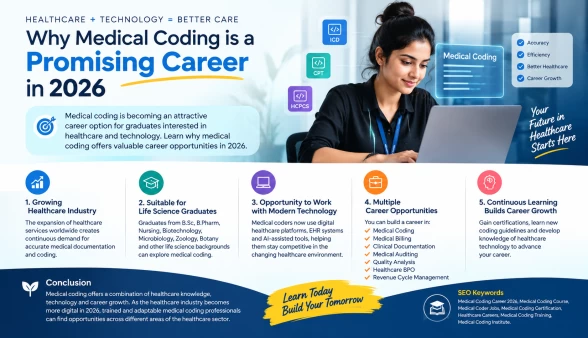
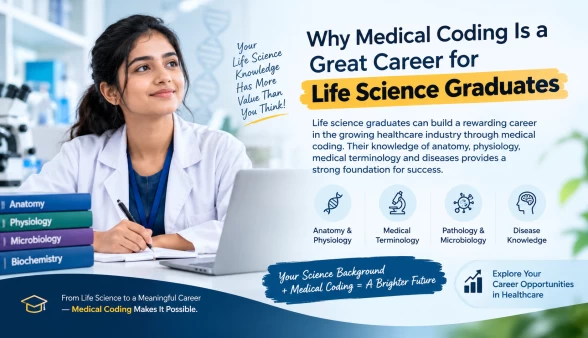
Medical Coding: A Smart Career After Graduation
Looking for a stable and rewarding career after graduation? Discover why medical coding is becoming a smart career choic...
VIEW MORE 
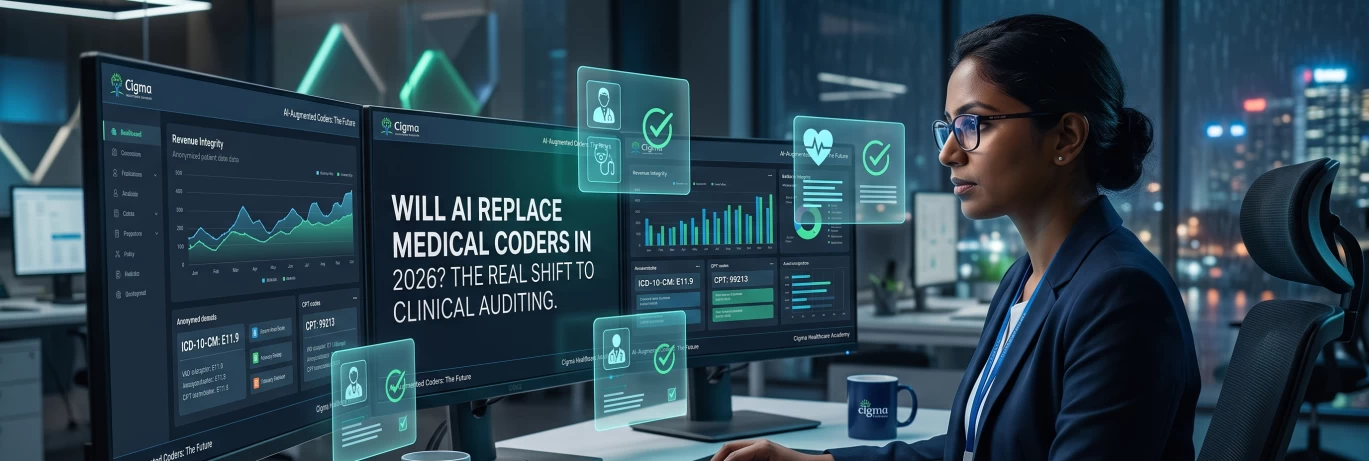
It is the question everyone asks before launching a career in healthcare administration: "Is artificial intelligence going to automate medical coding entirely?"
If you are looking at the headlines regarding AI advancements this year, it is easy to see why people are curious. The American Medical Association (AMA) has officially integrated AI-specific descriptors directly into the CPT code sets, acknowledging the massive role advanced software plays in modern diagnostics.
But if you look under the hood of how healthcare actually operates, the reality is far more exciting than the fear-mongering headlines suggest. AI isn’t replacing medical coders; it is upgrading them.
The era of slow, line-by-line manual code copying is fading.
In standard IT or general data entry, software can operate autonomously. Healthcare is completely different. Medical documentation is messy, nuanced, and deeply human.
A physician might document a case using complex, unstructured language—mentioning "shortness of breath" alongside "chronic tobacco use" and "decreased FEV1."
Here is why human coders remain completely irreplaceable:
Payer Denials & Compliance: Roughly 42% of insurance claim denials trace back to preventable administrative and documentation mistakes.
The "Audit Trail" Requirement: In 2026, healthcare compliance guidelines mandate a clear audit trail showing that a certified human professional reviewed, confirmed, and validated the final documentation before it reached a payer.
Context Over Keywords: AI works on patterns.
Because AI handles the repetitive groundwork (like looking up basic codes or pre-sorting charts), the daily role of a certified coder has shifted dramatically.
Instead of spending hours hunting through manuals for standard codes, you now act as the expert pilot managing the software. You review AI-generated suggestions, apply your knowledge of Anatomy and Physiology, catch the subtle nuances the algorithm missed, and finalize the data package.
Because this shift requires higher analytical skills and stronger clinical judgment, the market value of a well-trained, certified coder has actually increased.
The 2026 Career Outlook: Companies aren't looking for people who have just memorized code books. They are aggressively recruiting professionals who understand how to partner with digital health ecosystems to drive revenue integrity and eliminate claim denials.
If you want to ensure your career is completely secure against automation, your training strategy needs to reflect the modern landscape.
Focus on Clinical Integrity: Don't just learn the codes; learn the medical science behind them. Understanding why a clinical path was taken makes you an indispensable validator.
Target Advanced Certifications: Credentials like AAPC-CPC and AHIMA-CCS prove to global recruiters that you possess the advanced compliance knowledge that AI platforms simply cannot replicate.
Learn the Ecosystem: True job security lies in understanding the entire revenue cycle—how medical coding directly links to billing, provider documentation, and corporate compliance auditing.
At Cigma Healthcare Academy, we don't train our students for the industry of five years ago. Our curriculum focuses heavily on practical case-study analysis, clinical judgment, and real-world electronic health records (EHR). We prepare you to step straight into advanced corporate roles where you manage, audit, and command the technology—ensuring you stay miles ahead of the curve.
We can walk you through the day-to-day responsibilities of a modern corporate medical coder.