Whatsapp
 +91 9496064000
 Login
Login
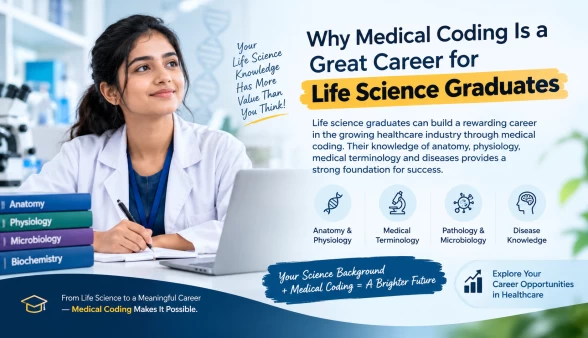
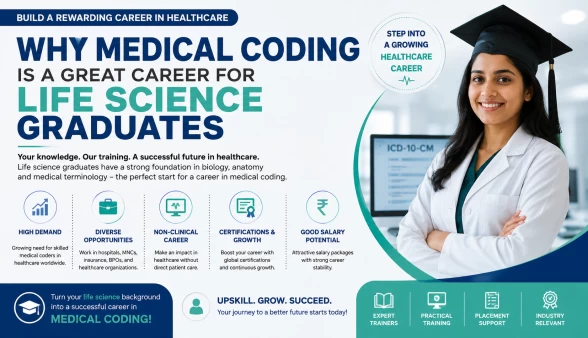
Why Medical Coding Is a Great Career for Life Science Graduates
Life science graduates can build a rewarding career in the growing healthcare industry through medical coding. Their kno...
VIEW MORE 
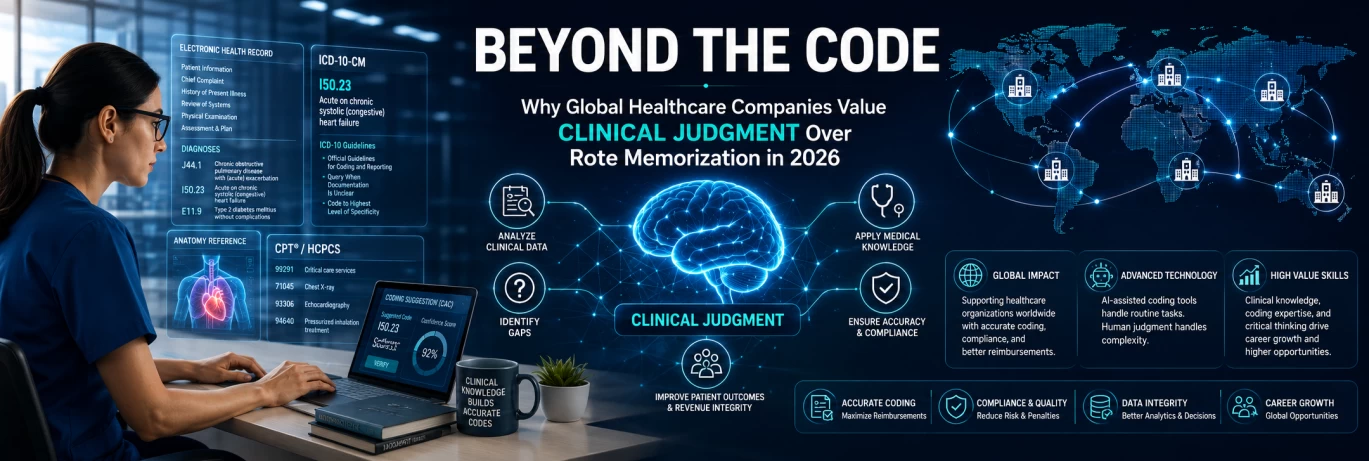
The global healthcare market is moving faster than ever, and with it, the expectations for medical coders have dramatically shifted. If you look at the job descriptions from top healthcare MNCs and global revenue cycle management (RCM) companies this week, you’ll notice a distinct trend. They aren’t just looking for data entry operators who can look up a code in a manual; they are looking for specialists with sharp clinical judgment.
For life science, nursing, pharmacy, and allied health graduates, this shift represents a massive career opportunity—provided you understand exactly what employers are searching for.
Traditionally, many beginners approached medical coding as a memorization game—learning standard ICD-10-CM or CPT coding conventions by heart. While knowing the guidelines is foundational, relying solely on memorization is no longer enough.
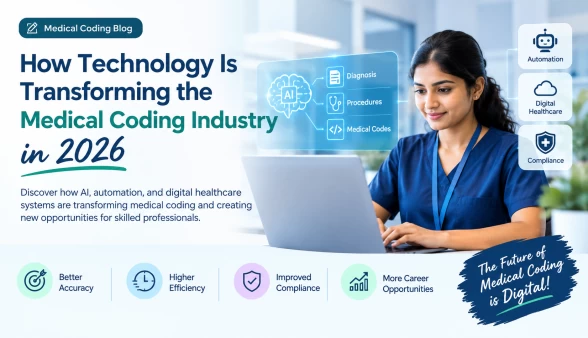
With the rapid integration of advanced automation and computer-assisted coding (CAC) tools in 2026, basic, repetitive code assignment is handled instantly. The true value of a modern medical coder lies in handling complex, ambiguous clinical scenarios where automated tools fall short.
Global healthcare employers value clinical judgment because a single chart error can lead to severe compliance risks or massive revenue loss for hospitals. Clinical judgment means having the ability to:
Read Between the Lines of a Medical Record: A physician’s documentation can sometimes be fragmented. A coder with strong clinical judgment understands the pathology of a disease and can recognize when symptoms, diagnostic tests, and final diagnoses don't fully align, prompting a precise provider query.
Master Complex Hierarchies: Whether navigating IP-DRG (Inpatient Diagnosis Related Groups) or tracking severe complications and comorbidities (MCCs), coders must understand how a patient's entire clinical picture impacts global reimbursement and quality scores.
Navigate Specialty Shifts: From HCC (Hierarchical Condition Categories) coding to complex outpatient surgeries, top-paying roles require an understanding of advanced medical anatomy and pharmacology to apply the most specific code possible.
If you have a background in BSc Nursing, Pharmacy, BPT, or Forensic Science, you have already spent years studying human anatomy, physiology, and medical terminology. You understand how drugs interact, how diseases progress, and how clinical interventions work.
When you transition into medical coding, you aren't just learning a new subject from scratch; you are learning how to translate your existing clinical knowledge into a universally recognized data format. When global RCM companies hire, they actively prefer candidates who can combine this academic background with an elite, practical certification strategy.
To stand out to global employers looking for specialized talent, your training approach needs to evolve beyond standard entry-level concepts:
Target Advanced, Integrated Mastery: Aim for programs that don't just teach basic outpatient coding, but integrate advanced inpatient methodologies, global compliance standards, and real-world auditing practices.
Focus on International Certifications: Credentials recognized by global bodies like AAPC and AHIMA (such as the CPC or CCS) remain the absolute gold standard for showcasing your technical precision to MNCs.
Get Hands-On with Industry Software: Ensure your training includes practical exposure to the actual encoders and electronic health record (EHR) environments used by international healthcare systems.
The narrative that entry-level coding is overcrowded only applies to those relying on basic, repetitive skill sets. For professionals who develop an integrated mastery of complex coding guidelines and leverage their clinical backgrounds, the global market in 2026 is experiencing an unprecedented demand for talent.
Stop trying to memorize the codebook. Focus on understanding the clinical story behind the data, and global career opportunities will follow