Whatsapp
 +91 9496064000
 Login
Login
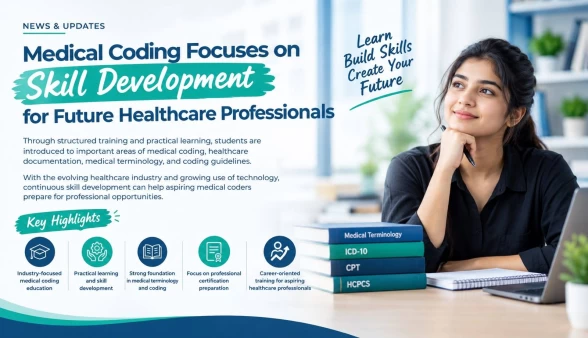
CIGMA MEDICAL CODING FOCUSES ON SKILL DEVELOPMENT FOR FUTURE HEALTHCARE PROFESSIONALS
CIGMA Medical Coding emphasizes skill development and industry-focused training to help aspiring healthcare professional...
VIEW MORE 
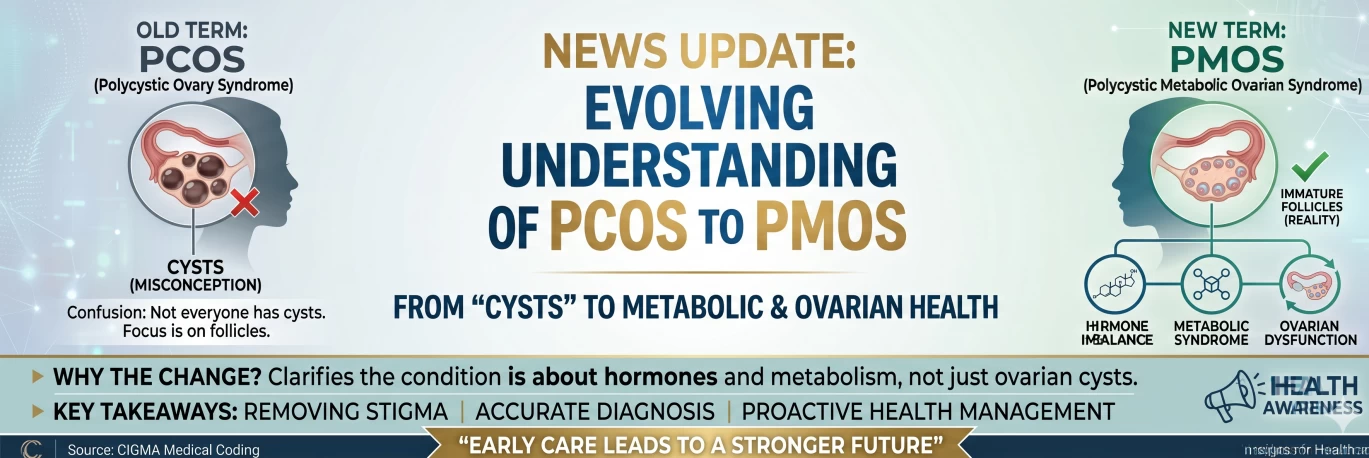
There is a significant shift happening in women’s healthcare. Experts are moving away from the term PCOS (Polycystic Ovary Syndrome) in favor of a more accurate name: PMOS (Polycystic Metabolic Ovarian Syndrome).
The word "Cyst" in PCOS has long been a source of confusion.
The Misconception: Many believe the condition requires the presence of large, physical cysts on the ovaries.
The Reality: Many women with this condition do not have clinical cysts. Instead, what are often seen are immature follicles (small fluid-filled sacs where eggs develop).
A New Definition: The name change aims to remove the "cyst" stigma and focus on the actual biological reality of immature follicles.
The new terminology, PMOS, provides a more comprehensive view of the condition as a Metabolic + Ovarian + Endocrine syndrome. It isn't just about the ovaries; it affects:
Hormone Imbalance: Disruptions in androgen levels.
Metabolism Issues: How the body processes energy and insulin.
Ovarian Dysfunction: Impacts on the regular ovulation cycle.
Irregular or missed periods.
Unexplained weight gain.
Acne and excessive hair growth (hirsutism).
Infertility or difficulty conceiving.
Anxiety, depression, and mood changes.
Insulin resistance.
The most important takeaway is that PMOS is manageable.
Lifestyle: A balanced, healthy diet and consistent exercise are the first lines of defense.
Wellness: Stress management is vital for hormonal health.
Professional Guidance: Regular medical follow-ups are essential for long-term health.
"Delayed diagnosis and a lack of awareness hurt many women. Awareness improves care." — Prof. Helena Teede, Founder of the International PCOS Network.