Whatsapp
 +91 9496064000
 Login
Login
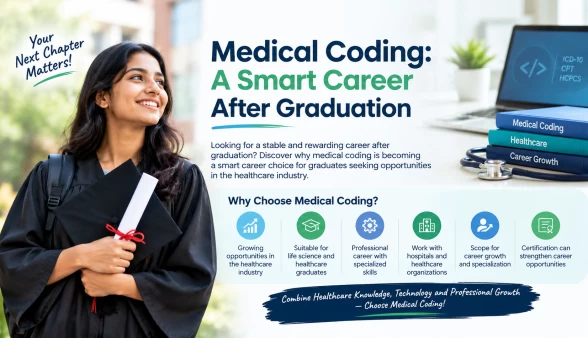
Medical Coding: A Smart Career After Graduation
Looking for a stable and rewarding career after graduation? Discover why medical coding is becoming a smart career choic...
VIEW MORE 
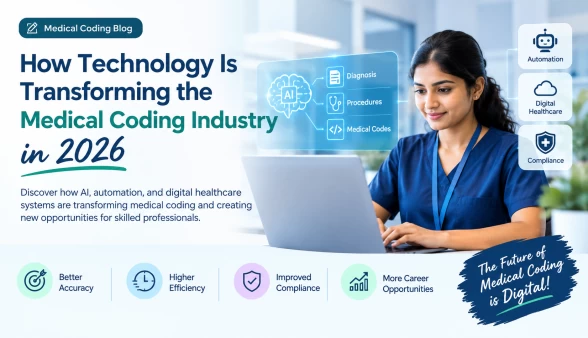
The healthcare industry is evolving rapidly, and Artificial Intelligence (AI) is playing a key role in reshaping many healthcare IT professions—especially medical coding. As global healthcare systems move toward automation and data-driven decision-making, medical coders are witnessing a significant shift in how coding is performed, reviewed, and optimized.
At Cigma Medical Coding Institute, we believe in preparing our students not just for today’s jobs, but for the future of medical coding careers. Understanding how AI impacts medical coding is essential for anyone aspiring to build a successful career in this field.
AI in medical coding involves the use of machine learning (ML), natural language processing (NLP), and automation tools to analyze clinical documentation and assign appropriate medical codes such as ICD-10-CM, CPT, and HCPCS.
AI-powered coding tools can:
Read and interpret physician notes
Suggest accurate diagnosis and procedure codes
Detect documentation gaps
Reduce manual coding errors
Improve turnaround time for claims
Rather than replacing coders, AI acts as a powerful assistant, enabling professionals to work faster and more accurately.
Traditional medical coding relied heavily on manual chart reviews and code selection. While this method required strong attention to detail, it was also time-consuming and prone to human error.
With AI-assisted coding:
Routine cases are auto-coded
Complex cases are flagged for expert review
Coders focus on audits, validation, and compliance
Productivity and accuracy increase significantly
This shift means that today’s medical coders must move beyond basic code assignment and develop analytical and decision-making skills.
AI is not eliminating medical coding jobs; instead, it is creating new specialized roles, such as:
AI Medical Coding Specialist
Coding Quality Analyst
Clinical Documentation Improvement (CDI) Specialist
Coding Auditor
Revenue Cycle AI Analyst
Certified coders who understand AI workflows are in high demand across hospitals, healthcare IT companies, and global medical coding firms.
Despite advancements in AI, human expertise remains critical. AI systems rely on data patterns, but they cannot fully understand:
Complex clinical scenarios
Physician intent
Regulatory updates
Ethical and compliance considerations
Medical coders ensure that AI-generated codes meet payer guidelines, legal standards, and reimbursement accuracy. This makes skilled coders indispensable in an AI-driven healthcare ecosystem.
To stay competitive, medical coders must upgrade their skill sets. Key skills include:
Strong knowledge of ICD-10, CPT, and HCPCS
Understanding AI-assisted coding platforms
Clinical documentation analysis
Compliance and auditing skills
Adaptability to new technologies
At Cigma Medical Coding Institute, our training programs focus on both core coding expertise and emerging AI trends, ensuring students are job-ready.
As one of India’s leading and AAPC-licensed medical coding institutes, Cigma is committed to future-focused education. Our programs are designed to help students:
Master international medical coding standards
Gain exposure to AI-driven coding workflows
Understand automation trends in healthcare IT
Prepare for global certification exams like CPC
Build long-term careers in medical coding and billing
Through expert-led training, real-world case studies, and placement support, Cigma ensures that students are equipped to succeed in both traditional and AI-assisted coding roles.
Countries like the USA, Canada, Australia, and the Middle East are rapidly adopting AI-based healthcare systems. Medical coders trained in AI-enhanced environments have better chances of securing:
High-paying jobs
Remote and work-from-home roles
Long-term career growth in healthcare IT
This makes AI knowledge a valuable advantage for aspiring coders.
The future of medical coding is hybrid—a combination of human expertise and intelligent automation. Coders who adapt, upskill, and embrace AI will enjoy:
Greater job security
Faster career progression
Higher earning potential
AI is not a threat; it is an opportunity to elevate the role of medical coders from data entry professionals to healthcare data experts.
AI is transforming medical coding careers by enhancing efficiency, accuracy, and career possibilities. However, success in this evolving field depends on quality training, certification, and continuous learning.
At Cigma Medical Coding Institute, we empower students to confidently step into the future of medical coding with industry-relevant skills and global career readiness. If you’re looking to build a stable, high-growth career in medical coding, now is the perfect time to start—with the right guidance and the right institute.