Whatsapp
 +91 9496064000
 Login
Login
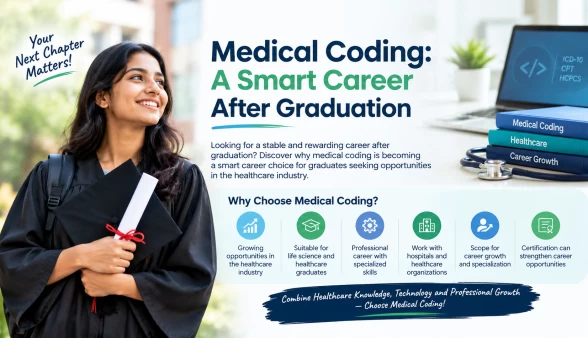
Medical Coding: A Smart Career After Graduation
Looking for a stable and rewarding career after graduation? Discover why medical coding is becoming a smart career choic...
VIEW MORE 
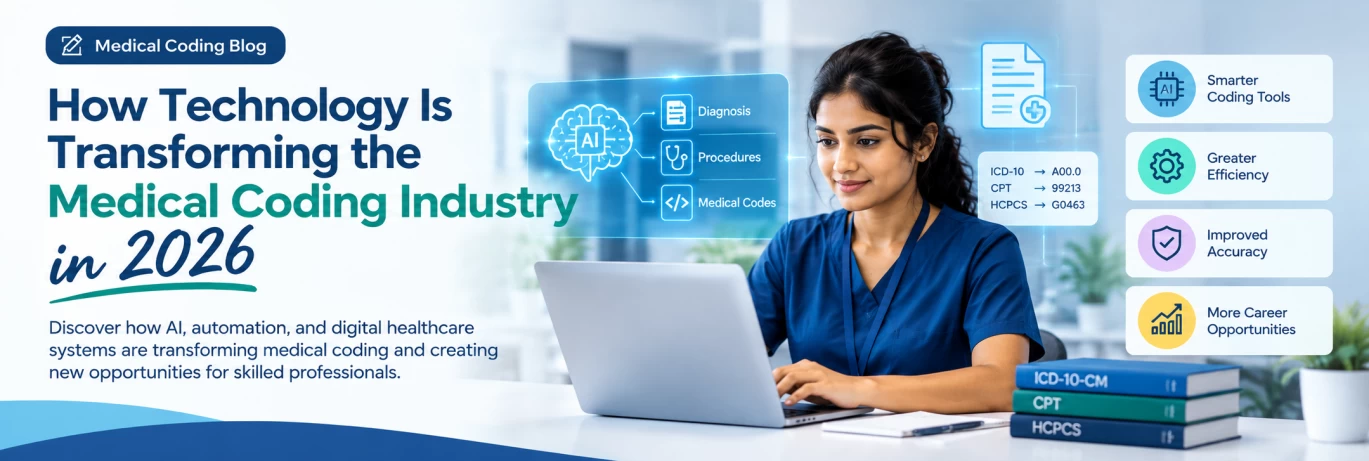
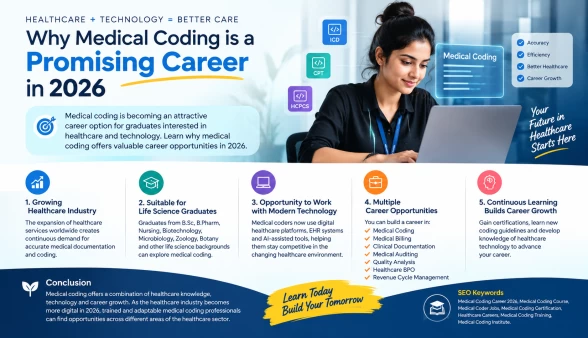
The medical coding industry is rapidly evolving with the introduction of Artificial Intelligence (AI), automation, and advanced healthcare technology. In 2026, medical coders are increasingly working alongside technology to improve coding accuracy, efficiency, and compliance.
AI-powered tools can assist with identifying diagnoses, procedures, and relevant medical codes from clinical documentation. However, technology does not completely replace the need for skilled medical coders. Human expertise remains essential for reviewing complex cases, interpreting medical documentation, handling exceptions, and ensuring coding accuracy.
Modern medical coders are therefore expected to develop both strong coding knowledge and digital skills. Understanding coding guidelines, medical terminology, documentation, compliance, and technology-assisted workflows can help professionals adapt to the changing healthcare environment.
As healthcare organizations continue adopting digital solutions, the role of medical coders is moving beyond routine data entry toward quality checking, validation, auditing, and clinical documentation review.
For students and graduates planning a career in medical coding, learning how to work with emerging technologies can provide an important advantage and help build a future-ready healthcare career.