Whatsapp
 +91 9496064000
 Login
Login
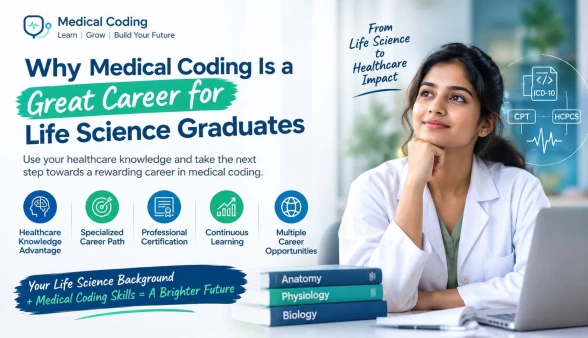
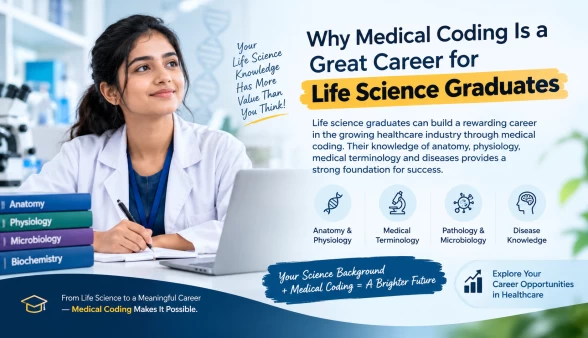
Why Medical Coding Is a Great Career for Life Science Graduates
Discover how life science graduates can build a rewarding career in medical coding by combining their healthcare knowled...
VIEW MORE 
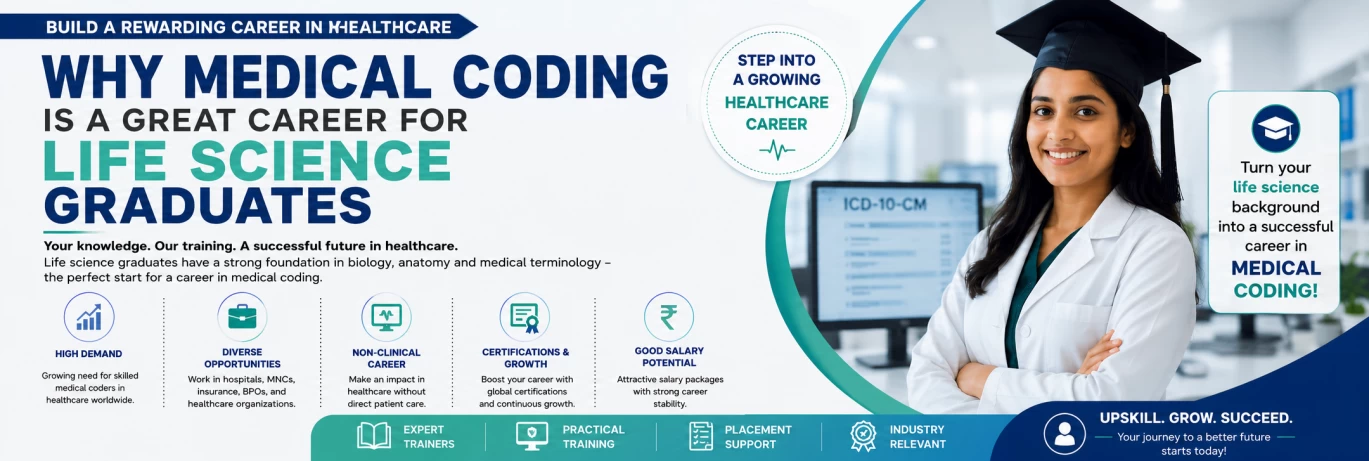
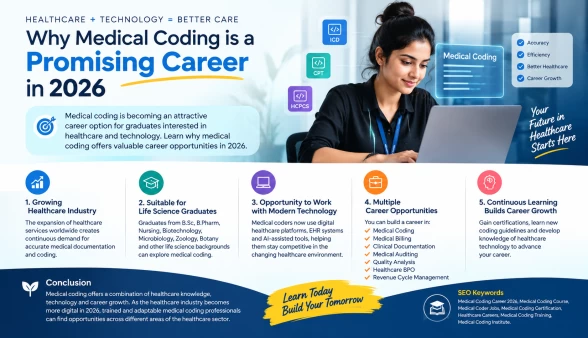
Medical coding offers life science graduates an opportunity to build a rewarding career in healthcare without working directly in clinical settings. With knowledge of biology, anatomy, physiology, and medical terminology, graduates can develop the skills needed to pursue medical coding roles. Explore the career opportunities, essential skills, certifications, and growth potential available in the medical coding field. Medical coding is becoming an attractive career option for life science graduates who want to build a professional career in the healthcare industry. Graduates from backgrounds such as B.Sc Biology, Biotechnology, Microbiology, Biochemistry, Pharmacy, Nursing, and other life science disciplines already have a strong understanding of medical terminology, anatomy, physiology, and disease processes, giving them a useful foundation for entering the field.
Medical coders play an important role in converting healthcare documentation into standardized codes used for medical records, insurance claims, billing, and healthcare data management. With proper training and practical knowledge, life science graduates can develop the coding skills required to work in hospitals, healthcare organizations, medical billing companies, insurance companies, and other healthcare-related sectors.